
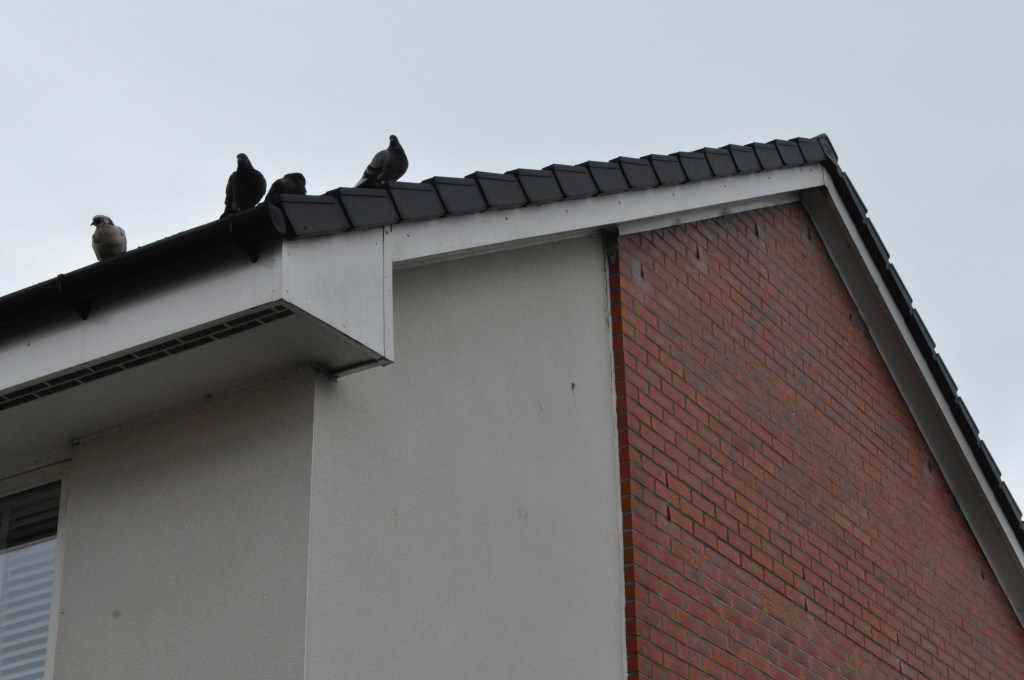
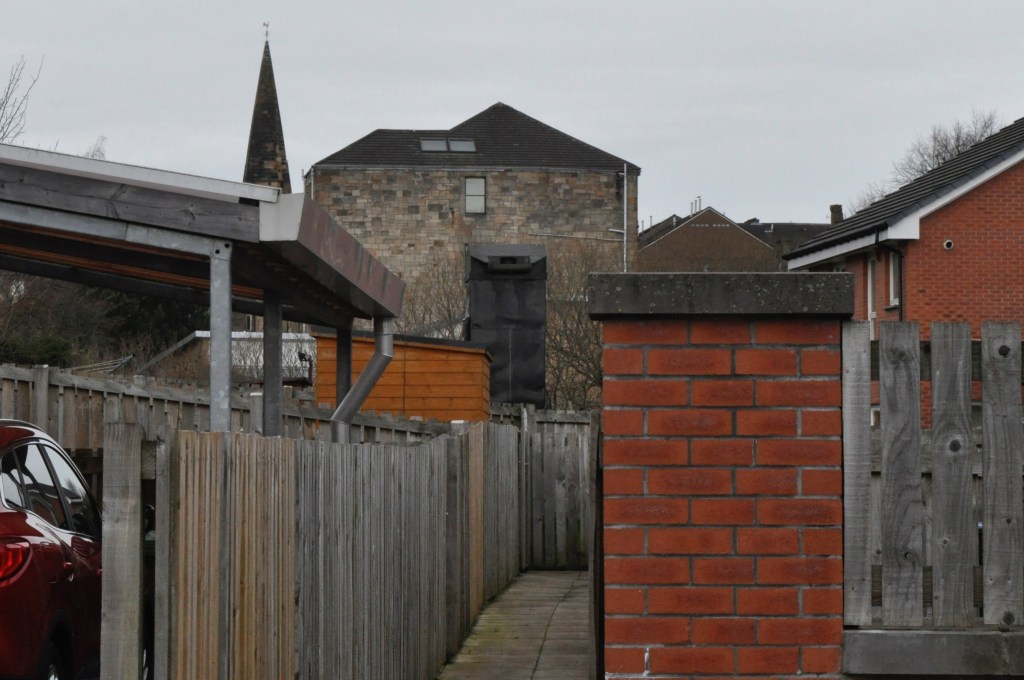
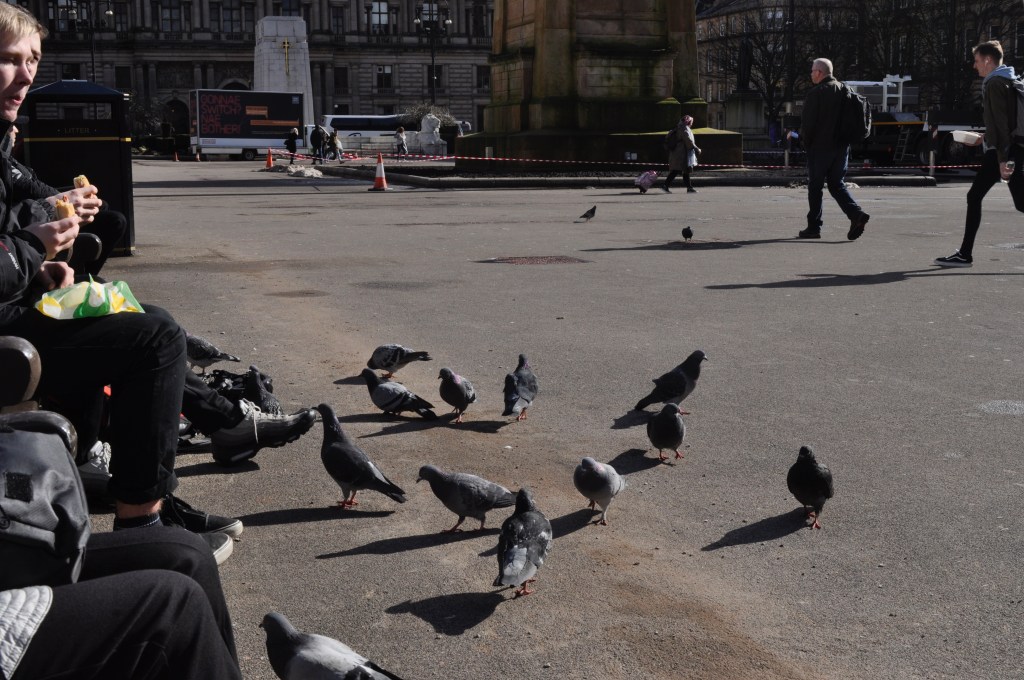


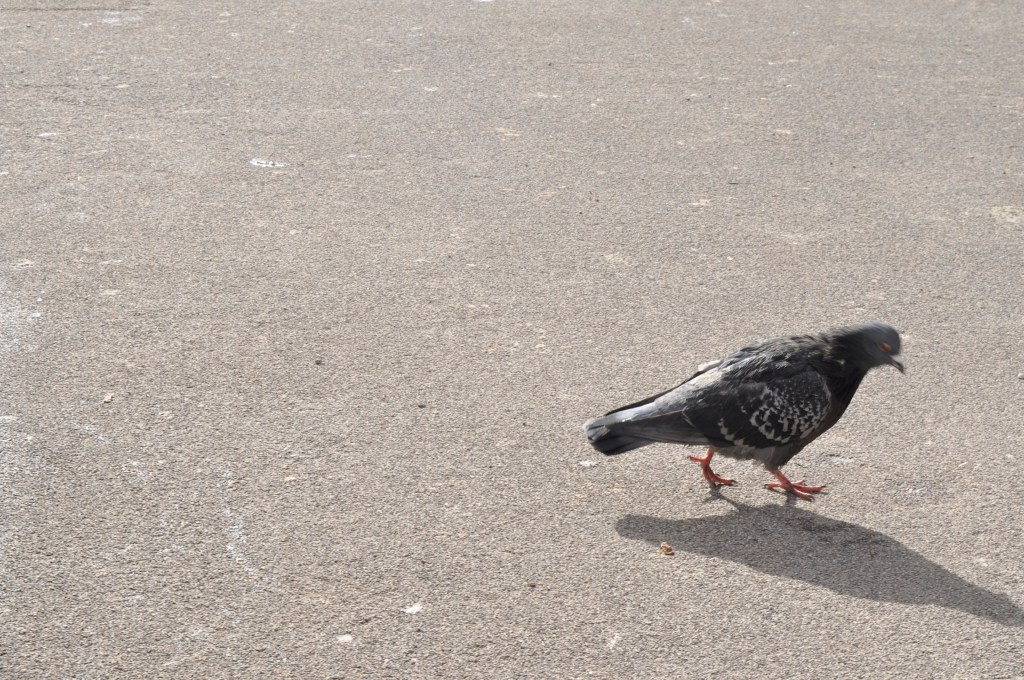


Another project from my Master’s degree at GSA in which I focus on the local society of feral pigeons and humans. These birds, historically cherished for their courage and intelligence (Hansell & Hansell, 1988), but nowadays seen as ‘rats with wings’, as the ‘ordinary’ (Allen, 2009), inhabit the city alongside humans. As kind pests, yet protected by the Wildlife and Countryside Act 1981, they live from our waste, like some informal ‘binmen’.
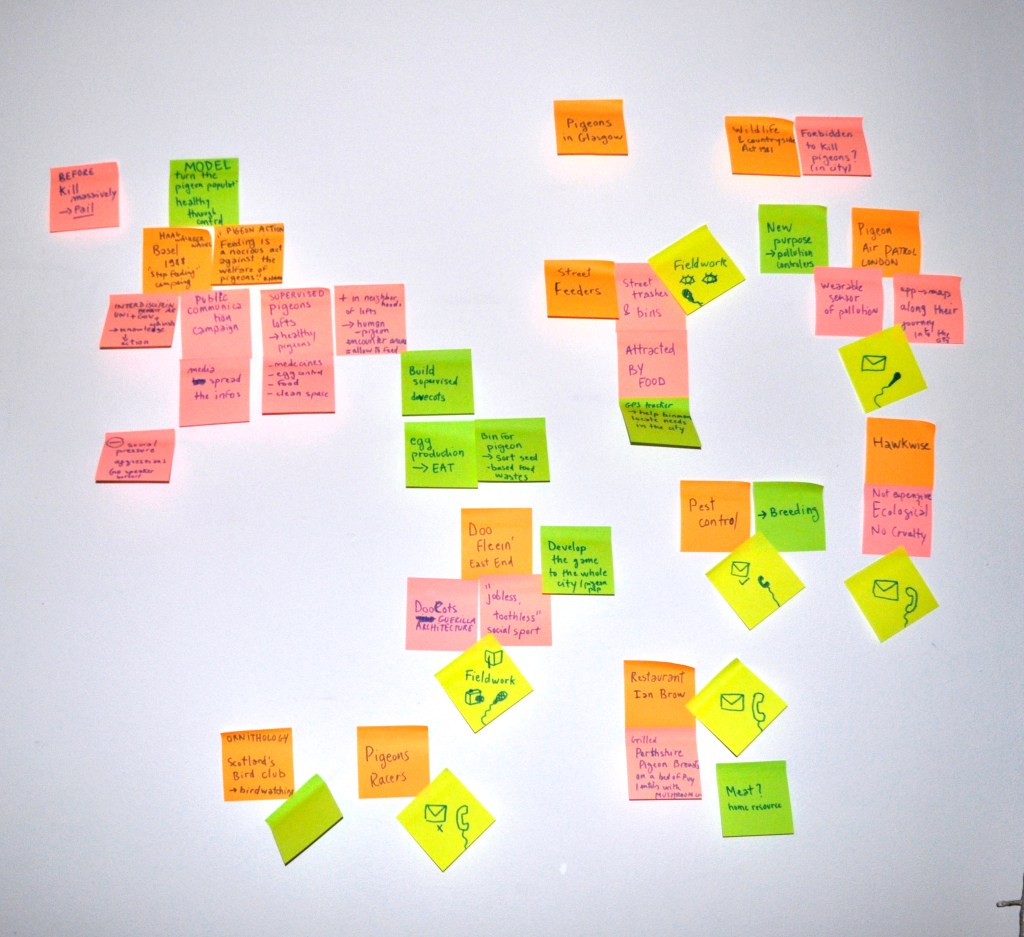
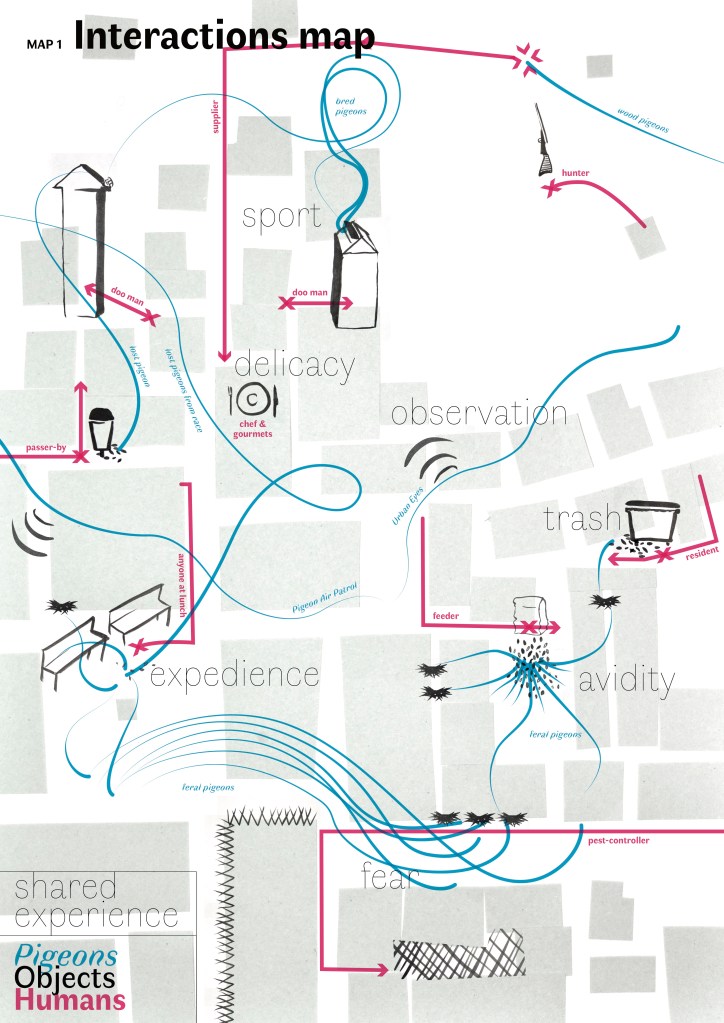
Gathering information about our feral pigeon population was quite difficult, as stakeholders weren’t available (pest controllers, fanciers, etc.), or weren’t interested in these livings (RSBP). Desk research (Haag-Wackernagel model, 1995) and field observations provided me with a basic understanding of the correlation between social behaviours and food. The first attempt at network mapping synthesizes these currently scattered interactions; it highlights crossed trajectories of humans and pigeons and so on multivalent agencies. But this map presents a limited and scattered perspective, by a lack of data.
How to fill this gap of knowledge? My hypothesis is that knowing better about these birds would generate more care for them within a broadened society.
Firstly, how to define the roles of observer and observed pragmatically? It would be foolish to hope to get the perception of pigeons as the animal world remains hidden behind a veil, a surface (Broglio, 2011); artists and biologists attempt to create contact zones which sometimes generate frictions between perspectives. ‘Snæbjörnsdottir and Wilson work at the margin […] this art opens up the world of the animal but refuses to represent, to speak for, others species.’(ibid) My stance as a designer is to gather knowledge from the human world, from our perceptive tools (senses, and technology), by challenging Glaswegian people to observe specifically their pigeons.
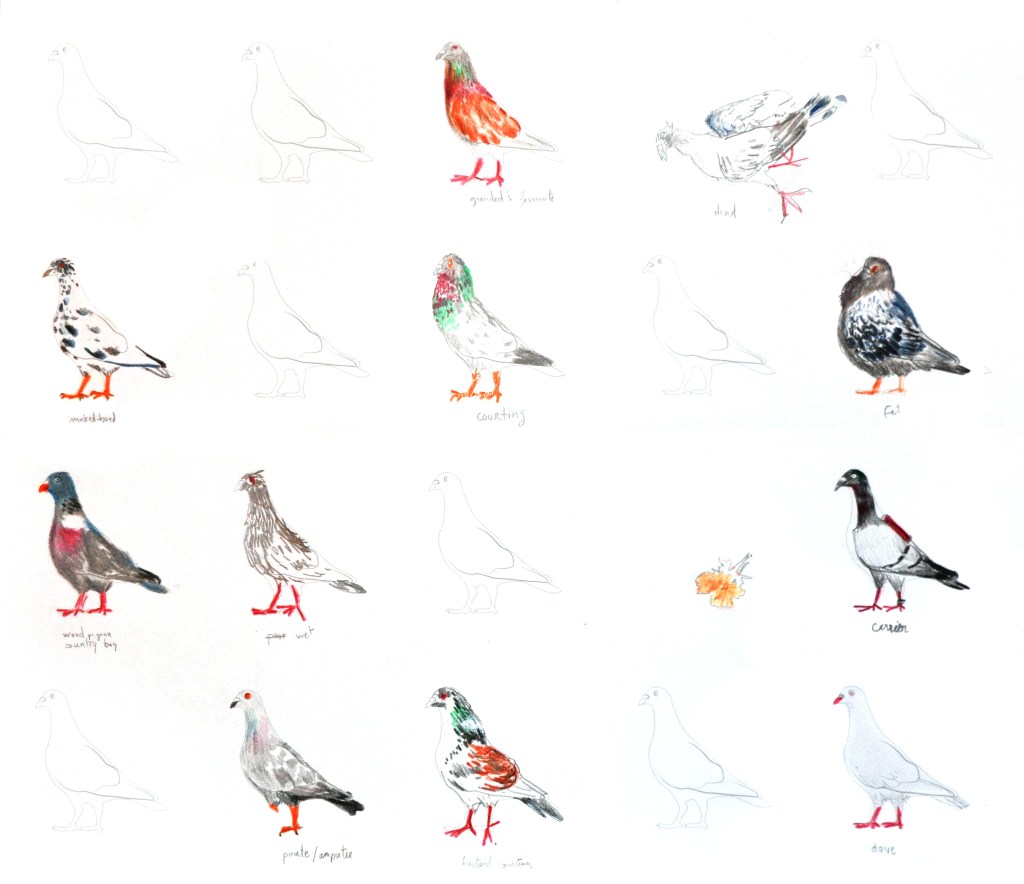
Secondly, how can knowledge of pigeons solidify connections in the city? Proposed by the City Council, the open Facebook group ‘Glasgow pigeons spotting’ gathers photographs sent by citizens of opportunistic observations of our local feral pigeons. The word ‘spot’ refers to a location — allowing a site-specific knowledge of Glasgow territory through its pigeons —, and to a voluntary observation process which is not taken as a stain, but more as a chill urban activity. There is an aesthetic interest in appreciating the incredible variation of feather patterns (explained by the wealthy mixing of species within the feral population). And there is a narrative interest in identifying singular pigeons and reconstituting their journey into the city, and possibly inventing new stories with them. By connecting layers of society, this collective enquiry will be published regularly by the city council, as a democratic process of local ethology.
.
date
2018
media
photographs, graphite and coloured pencils on paper, digital printing on white paper and tracing paper.
size
misc.
© Carole Papion 2022
 carole papion